.svg?w=300&h=85)
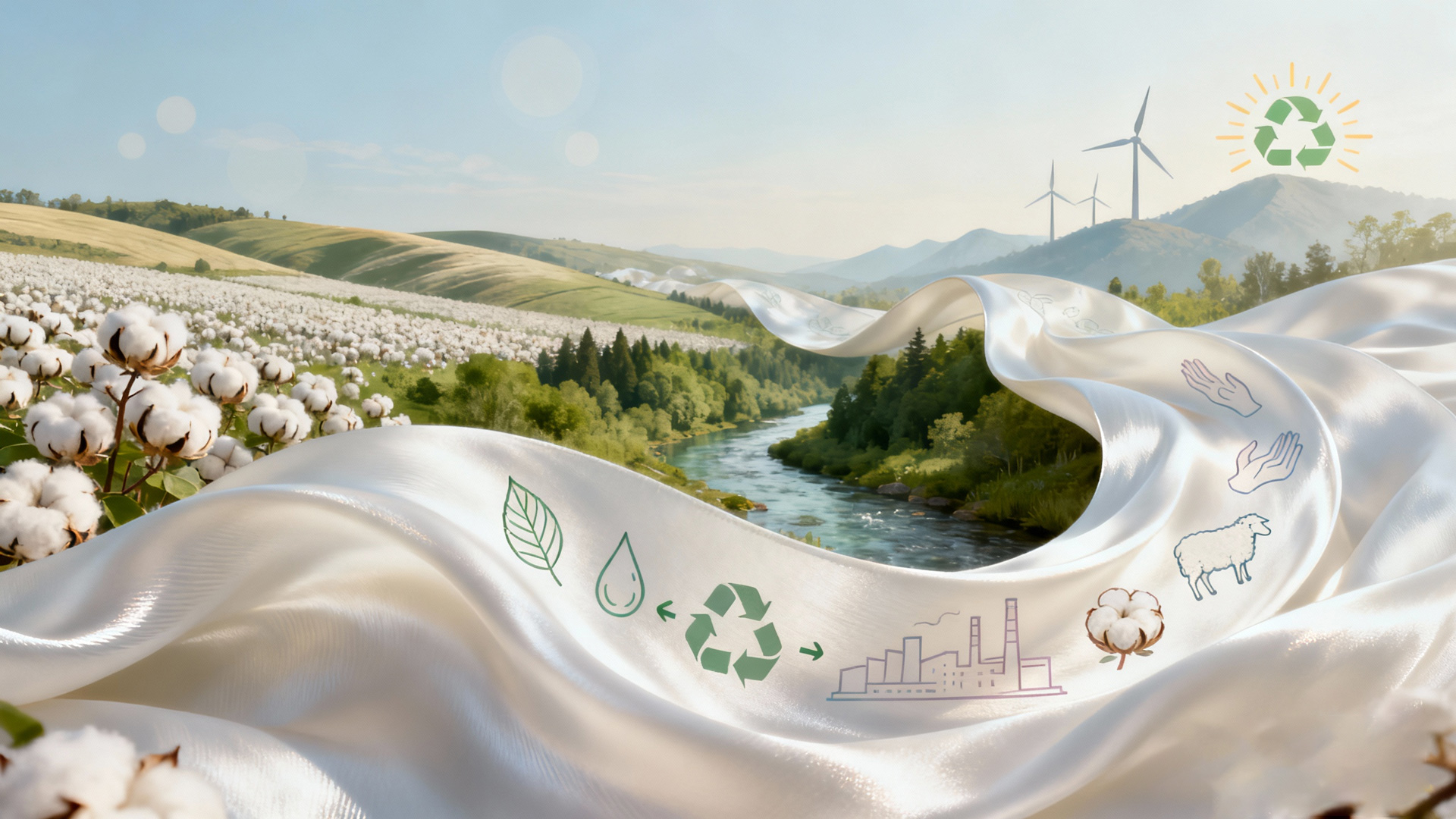
What does “Certified by XXX” on a label really mean?
Drawing on years of expertise in the silk supply chain, TOWNSSILK has compiled 20 of the most representative textile certifications to help you understand—within three minutes—which logo guarantees sustainability, safety and social responsibility.
Why Are Certifications Needed?
1. Health & Safety: Keep formaldehyde, heavy metals and allergenic dyes at bay.
2. Environmental Protection: Cut energy use, wastewater and greenhouse-gas emissions.
3. Social Responsibility: Ensure fair hours, wages and working conditions.
4. Quality Consistency: Reduce risks of shrinkage, colour fading and breakage.
7 Key Categories
| Category | Representative Certifications | Core Focus |
|---|---|---|
| Environmental Sustainability | OEKO-TEX, GOTS, GRS, RCS, Bluesign, Cradle to Cradle, ISO 14000 | Restricted chemicals, energy & emission management |
| Material Traceability | OCS, RWS, FSC, Lenzing TENCEL™, SFA | Legally sourced materials traceable to farm/forest/ranch |
| Social Responsibility | Fair Trade Textile, SA8000, WRAP, RDS | Worker welfare, zero tolerance for child & forced labour |
| Animal Welfare | RDS, RWS | No live-plucking, mulesing or other cruelty |
| Quality Management | ISO 9000, Green Seal | Process standardisation, durability & performance tests |
| Circular Economy | Zero Waste, Cradle to Cradle | Design for disassembly, ≥ 90 % waste diverted from landfill |
| Whole-Chain Sustainability | BCI, ISO 14000 | Continuous improvement in farming, manufacturing & transport |
20 Certifications at a Glance
1. OEKO-TEX: Europe’s best-known safety label; Standard 100 / Made in Green / STeP cover products, chemicals and factories.
2. GOTS: ≥ 70 % organic fibre plus wastewater, dye and labour audits.
3. GRS: ≥ 20 % recycled content with chemical restrictions and social audit.
4. RCS: Verifies recycled content only; simpler than GRS.
5. Bluesign: Controls chemistry at source, focuses on energy and worker safety.
6. OCS: Confirms organic content percentage without deep processing audit.
7. BCI: Drives environmental, social and economic progress in cotton farming.
8. WRAP: Global social-responsibility program for apparel production.
9. Cradle to Cradle: Whole-life design emphasising recyclability and non-toxicity.
10. ISO 9000: Quality-management system ensuring product consistency.
11. ISO 14000: Environmental-management system for organisational emissions and resources.
12. RDS: Down standard for animal welfare and traceability.
13. RWS: Wool standard for animal welfare and pasture ecology.
14. Fair Trade Textile: Fair pricing, safe workplaces and community funds.
15. SA8000: Social-responsibility system covering hours, wages and safety.
16. Lenzing TENCEL™: Lyocell fibres produced in closed-loop solvent systems.
17. Green Seal: Comprehensive eco-label from energy use to durability.
18. FSC: Sustainable forestry certification for wood-based fibres (viscose, lyocell, etc.).
19. Zero Waste: Company-level goal of ≥ 90 % waste reuse.
20. SFA: Sustainable Fibre Alliance standard focusing on cashmere ecology and community impact.
Quick Q&A
Q: Which labels control chemical discharge?
A: OEKO-TEX, Bluesign, GOTS, Cradle to Cradle and ISO 14000.
Q: Most authoritative organic standard?
A: GOTS first, OCS second.
Q: How to judge animal welfare?
A: RDS for down, RWS for wool, SFA for cashmere.
Conclusion
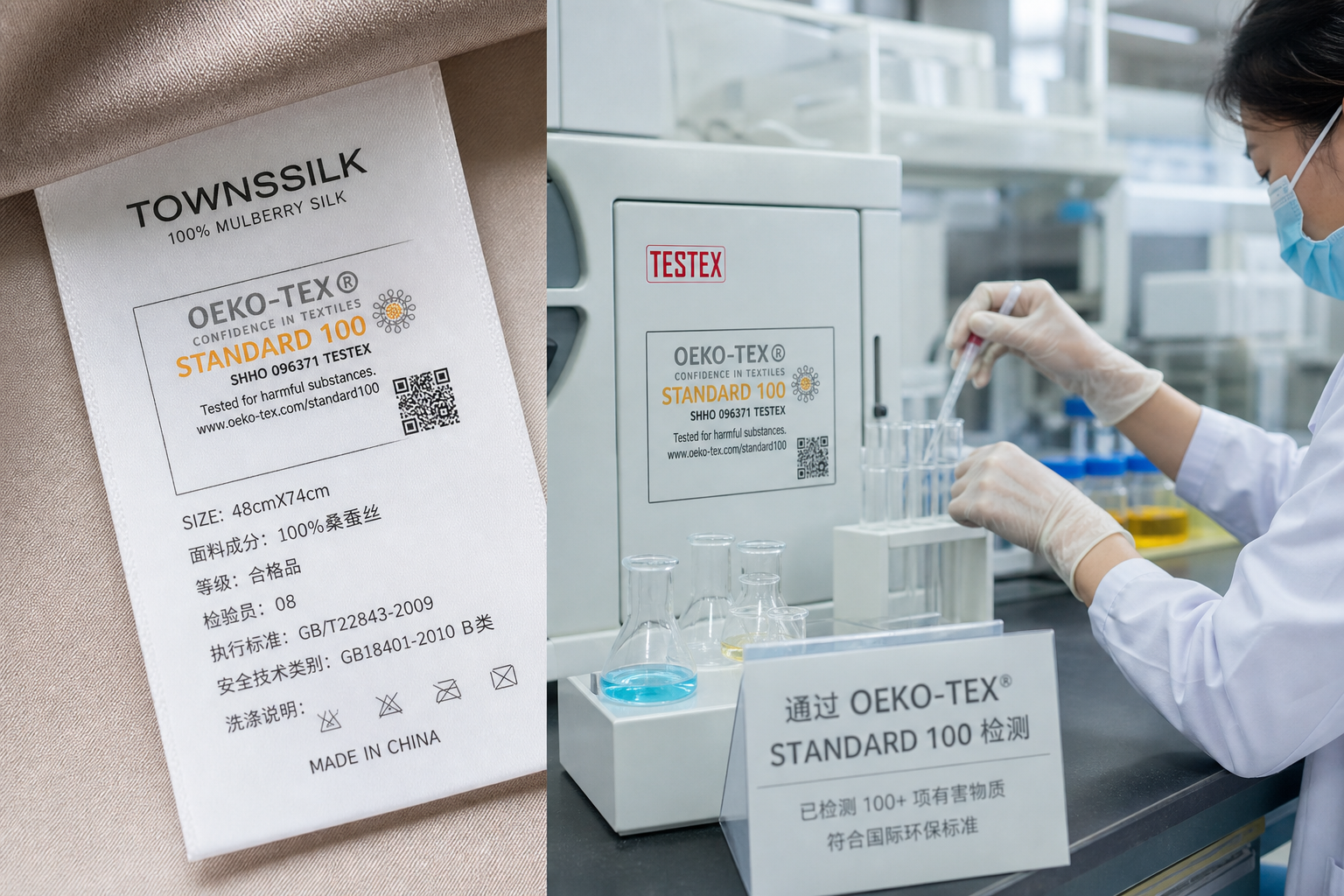
A trusted certification is a dual commitment to consumer health and the planet’s future. TOWNSSILK stays true to 100 % mulberry silk quality, already certified by OEKO-TEX Standard 100, and will continue to broaden its sustainable scope so every inch of fabric feels even safer.
Information provided for reference only. Standards and versions change over time. Always verify certificate number, validity and scope before purchase.
.png?w=1536&h=1024)