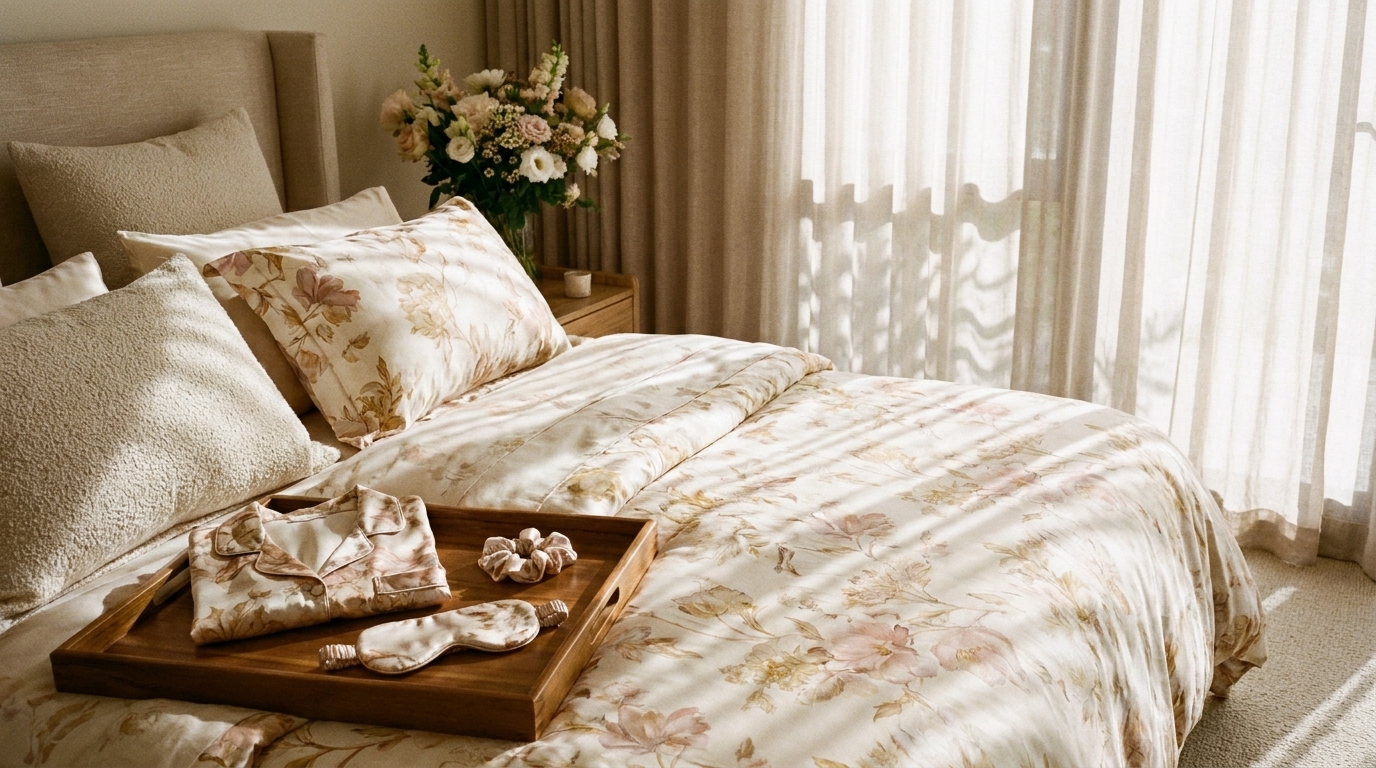
If you've been shopping for silk recently—whether you're eyeing a silk pillowcase, a pair of pajamas, a silk scarf, a silk dress, or even silk fabric by the yard—you might have noticed a jump in prices.
It's easy to assume a brand is just overcharging, but the truth is much more fascinating. Unlike polyester, which is churned out in a factory using a fixed chemical formula, silk is a precious agricultural product. It is deeply connected to nature, weather, and global economics.
At TOWNSSILK, we believe you deserve to know exactly what you are paying for. Here is the real story of what goes into your silk sheets, sleepwear, and every other silk product you love—and why true luxury is always worth the investment.
The Harvest: It All Comes Down to the Cocoons

You can't just flip a switch and make silk. It all starts with the silkworm.
Silkworms feed on mulberry leaves and spin a continuous filament to form a cocoon. Farmers carefully collect and sort these cocoons, which are then softened in warm water to reel out the raw silk. Importantly, the 5A–6A grade silk yarn that premium brands rely on comes from silkworms raised by farmers—not from a factory. It is the result of careful breeding, feeding, and harvesting by skilled agricultural workers.
Because this relies on natural harvest cycles, supply isn't always predictable:
- A plentiful harvest gives mills more usable material, keeping costs relatively stable.
- A smaller harvest means factories must compete for fewer cocoons, instantly driving up the raw material cost.
- Careful sorting requires skilled labor. A clean, well-formed cocoon creates long, smooth fibers. Damaged cocoons break into shorter fibers, resulting in lower-grade silk.
It's also worth noting that labor costs in China are getting more expensive. The delicate, labor-intensive work of raising silkworms, sorting cocoons, and reeling silk is increasingly costly as wages rise. This is a major factor behind the silk price increase that shoppers see on everything from silk bedding to silk accessories.
That is why lower silk prices don't always represent a bargain. Some reputable brands absorb part of a cost increase rather than blending in cheap substitutes. Others quietly use shorter, lower-grade fibers just to keep the sticker price low.
When you buy premium silk—whether it's a pillowcase, a scarf, a dress, or silk fabric—you are buying the rarity of a specific harvest. Honest brands will never compromise by mixing in synthetic fibers, even when raw silk gets expensive.
The Climate: Why Weather Matters for Your Silk

Silkworms are incredibly sensitive creatures. They need just the right temperature and humidity to thrive.
Drought reduces the availability of mulberry leaves (their only food), while extreme weather—such as prolonged heatwaves, severe flooding, or unseasonal cold snaps—can damage cocoon quality. If the cocoons are weak or uneven, it takes much more raw material to produce a smooth, strong silk thread.
That difference shows up in your products as a higher cost for smooth, durable fabric. A premium silk sheet relies on consistent fiber quality across a large surface. Uneven or weaker yarn can affect softness, drape, and how the garment feels after repeated washing. The same applies to silk scarves, silk dresses, and any other silk product where texture and longevity matter.
A beautiful, durable piece of silk is a minor miracle of agriculture. The next time you slip into your silk sheets or wrap a silk scarf around your neck, know that you are enjoying a fabric that survived drought, extreme weather, and the elements to reach your wardrobe.
The Global Economy: It's a Luxury Commodity

Raw silk isn't just a fabric; it's a global commodity, much like coffee or fine wine.
Its price is affected by international currency exchange rates, export policies, and shipping costs. Furthermore, because silk is so valuable, traders often hold onto large inventories to sell when prices are higher, which drives the cost up even further. Add rising labor costs in China to the mix, and the pressure on silk prices becomes even clearer.
If you see a silk brand suddenly dropping its prices by 50% on silk bedding, silk pajamas, or any other silk product, it's usually a red flag. High-quality silk cannot be sold at a massive discount without cutting corners somewhere. A stable, fair price reflects a brand that values quality over cheap gimmicks.
The Grade: Why 6A Silk Is Worth Every Penny

Have you ever heard of "6A Silk"? It's the highest grading standard for raw silk in the textile industry.
Achieving this grade means the silk filaments are incredibly long, uniform, and clean. Remember: 5A–6A grade silk yarn is produced by silkworms raised by farmers, and reaching this premium grade depends on skilled agricultural care at every step. When woven, 6A silk creates a smoother surface, a more refined drape, and better resistance to early fuzzing. Lower-grade silk may contain shorter, damaged filaments—it's still real silk, but it can feel rougher and wear thin much faster.
You get what you pay for. A 5% cheaper silk garment might seem like a steal, but if it frays or feels stiff after a few washes, it's a false economy. Upgrading to 6A grade silk means your favorite dress, pillowcase, silk scarf, or silk bedding will last for years, not months.
Why TOWNSSILK Prices Stay Fair

We know that fluctuating prices can be frustrating. That's why TOWNSSILK works directly with the source.
By cutting out unnecessary middlemen, we keep our costs clear and our markups reasonable. Our promise is simple: if costs rise—whether due to harvest shortages, extreme weather, or rising labor costs in China—we would rather absorb part of that increase than dilute the fabric, substitute lower-grade silk, or misrepresent fiber content just to offer a cheaper sticker price.
A lower price is never a good deal if the product wears out quickly. We keep our prices fair by protecting the material, the workmanship, and the honest labeling that make high-quality silk worth buying—across our full range of silk products, from bedding and sleepwear to accessories and fabric.
FAQ
1. Why do silk prices change so often?
Because raw silk is an agricultural product! It depends on the weather, the harvest cycle, and global trade. Unlike synthetic fabrics, we can't just make more silk with a machine. Drought, extreme weather, rising labor costs in China, and changes in global demand can all affect the price of your finished silk products.
2. Will the price go down if I wait for a specific season?
No particular season guarantees cheaper silk. While a brand might run a promotion, the actual raw-material costs, shipping, and demand move independently. If you see a piece you love from a reliable brand—whether it's silk bedding, silk pajamas, or a silk scarf—don't wait too long!
3. How can I tell if the silk is high quality before buying?
Look for the term "6A Silk" (the highest raw silk grade), check the momme weight (19–22 momme is perfect for pajamas and pillowcases), and look at close-up photos for a smooth, even texture. A transparent brand will always clearly state these details—and will be honest about where the 5A–6A grade silk yarn comes from.
Conclusion
A silk price tag reflects the material's origin, careful processing, and the conditions involved in bringing it to your home—from the farmers who raise the silkworms to the rising labor costs in China and the impact of drought and extreme weather. Paying more for verified 6A silk is a sensible long-term choice when it delivers better comfort and durability, whether you're buying silk bedding, sleepwear, accessories, or fabric.
Ready to experience true luxury that lasts?