.svg?w=300&h=85)
Why Is Silk Not All the Same? And Why Do Prices Vary So Much?
What to remember before buying silk:
- Mulberry Silk — Smoothest, most uniform, most skin-friendly. Best for bedding, intimate wear, and gifts. Mid-to-high price, but the most reliable.
- Tussah Silk — More rustic and textured. Good for outerwear and home decor. More budget-friendly.
- Eri Silk — Strong eco story, wool-like feel. Good for knitwear and home textiles, but limited choices.
- Muga Silk — Natural golden hue, extremely rare, high price. Best for collector-level pieces.
- TOWNSSILK — We are a Mulberry Silk brand. Mulberry Silk is the fiber we build around, and we turn it into the pieces you use every day: bedding, scarves, sleep caps, eye masks, scrunchies, apparel, and more.
Have you ever noticed this: two items both labeled "silk," one costs $30, the other $300. They both look smooth and shiny. So why the huge gap?
The answer is simple: silk is not all the same. From what the silkworm eats, to how long the fiber is, how heavy the fabric is woven, and where it comes from — every layer affects both price and experience.
Understanding Mulberry Silk
.png?w=1536&h=1024)
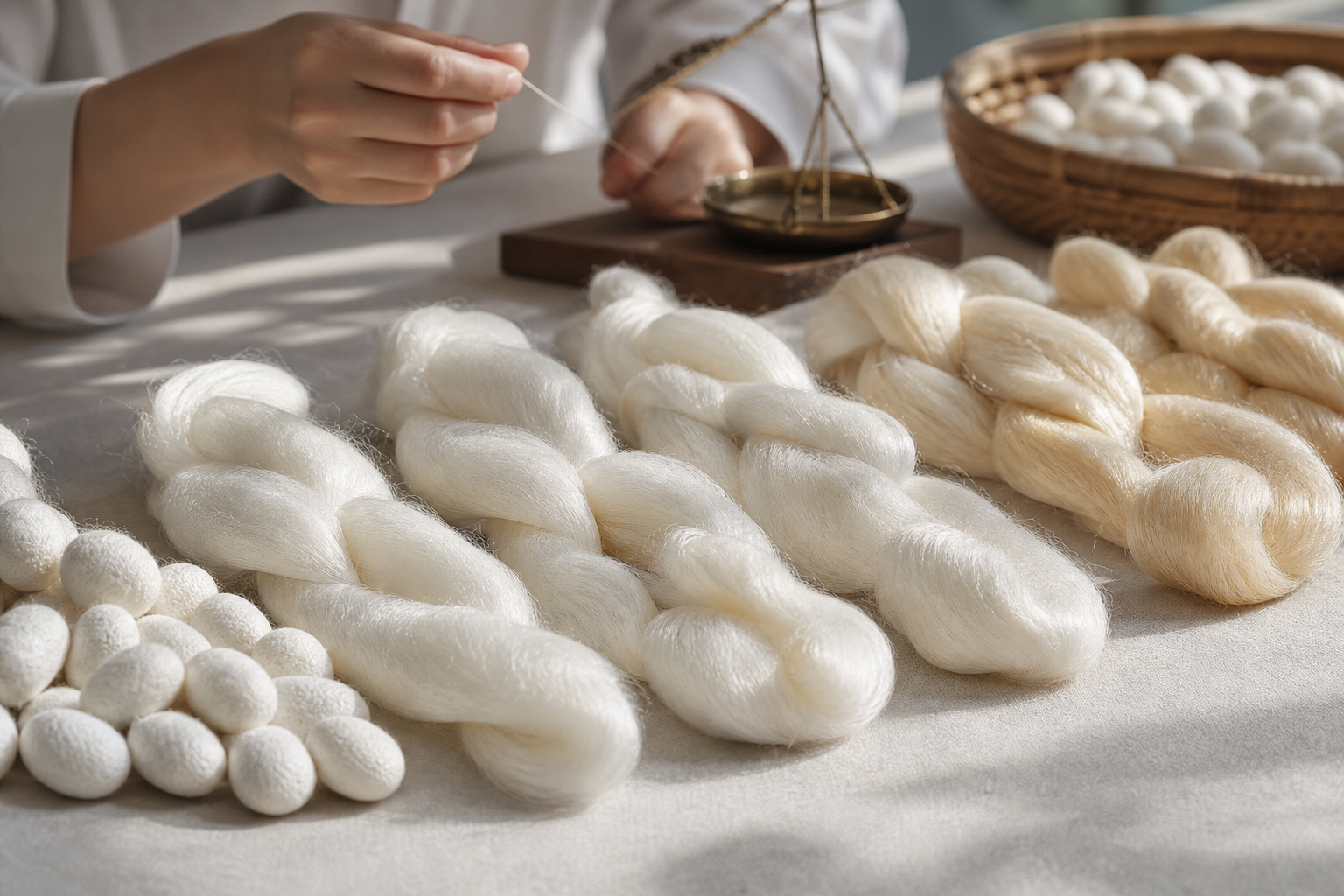
Mulberry Silk comes from domesticated silkworms that eat only mulberry leaves. That single-leaf diet is why the fibers are longer, finer, and more uniform than other silks — and why the color stays consistent, usually white or off-white.
Its biggest advantages are smoothness, softness, and luster. It is also hypoallergenic, making it especially friendly for sensitive or allergy-prone skin. It has good strength, too — with proper care, it can last for years, not just one season.
If you want silk that is comfortable against the skin, used daily, and built to last, Mulberry is usually the safest choice. That is why high-end bedding, silk shirts, sleep masks, pillowcases, and scarves mostly go with Mulberry.
Comparing the Four Silk Types
.png?w=1536&h=1024)
Many things are called "silk," but they suit very different uses. This table helps you see the difference at a glance:
| Feature | Mulberry Silk | Tussah Silk | Eri Silk | Muga Silk |
|---|---|---|---|---|
| Fiber | Long, fine, uniform | Short, coarse | Medium, textured | Golden, durable |
| Feel | Smooth, lustrous | Rough, natural sheen | Soft, slightly coarse | Lustrous, coarse |
| Color | White / off-white | Grayish-brown (often bleached) | White to reddish-brown | Natural golden-yellow |
| Price Feel | Mid-to-high | Budget-friendly | Moderate | Collector-level |
| Availability | Many options | Fairly available | Limited | Very limited |
| Best For | Bedding, intimate wear, gifts | Outerwear, home decor | Eco lines, knitwear, home textiles | Collector pieces |
Each silk has its own trade-offs. Mulberry is the smoothest and most consistent; Tussah is the most budget-friendly; Eri has the strongest eco story; Muga is the rarest. Knowing the difference helps you avoid spending money on the wrong one.
A Closer Look at Tussah, Eri, and Muga
Tussah Silk (Wild Silk)
Made by wild silkworms, its fibers are shorter and coarser, with a grayish-brown color that is often bleached before use. It suits outerwear and home decor where a bit of texture is welcome, and it is more budget-friendly. But it is not the best fit if you want uniform, fine, skin-friendly silk.
Eri Silk (Peace Silk)
Its biggest selling point is sustainability — the moth emerges naturally before the silk is harvested, which is why it is often called "peace silk." The feel is more wool-like, with good warmth, making it suitable for knitwear and home textiles. The trade-off: fewer options and less stable lead times.
Muga Silk (Golden Silk)
Native to Assam, India, with a natural golden hue and very limited production, Muga is expensive. It suits collector-level or limited-edition pieces. But as an everyday silk, its supply and price are not realistic for most people.
What These Silks Become: From Fiber to Product
.png?w=1536&h=1024)
Knowing the fiber is only half the story. What matters is what it becomes:
| Silk Type | What It Usually Becomes |
|---|---|
| Mulberry Silk | Everyday silk essentials — bedding, sleepwear, accessories, apparel |
| Tussah Silk | Outerwear, upholstery, home decor |
| Eri Silk | Knitwear, sweaters, home textiles |
| Muga Silk | Collector pieces, limited-edition garments |
If you want something you can use every day — sleep in, wear, gift — Mulberry Silk is the one that shows up across all of it.
How to Choose the Right Silk for You
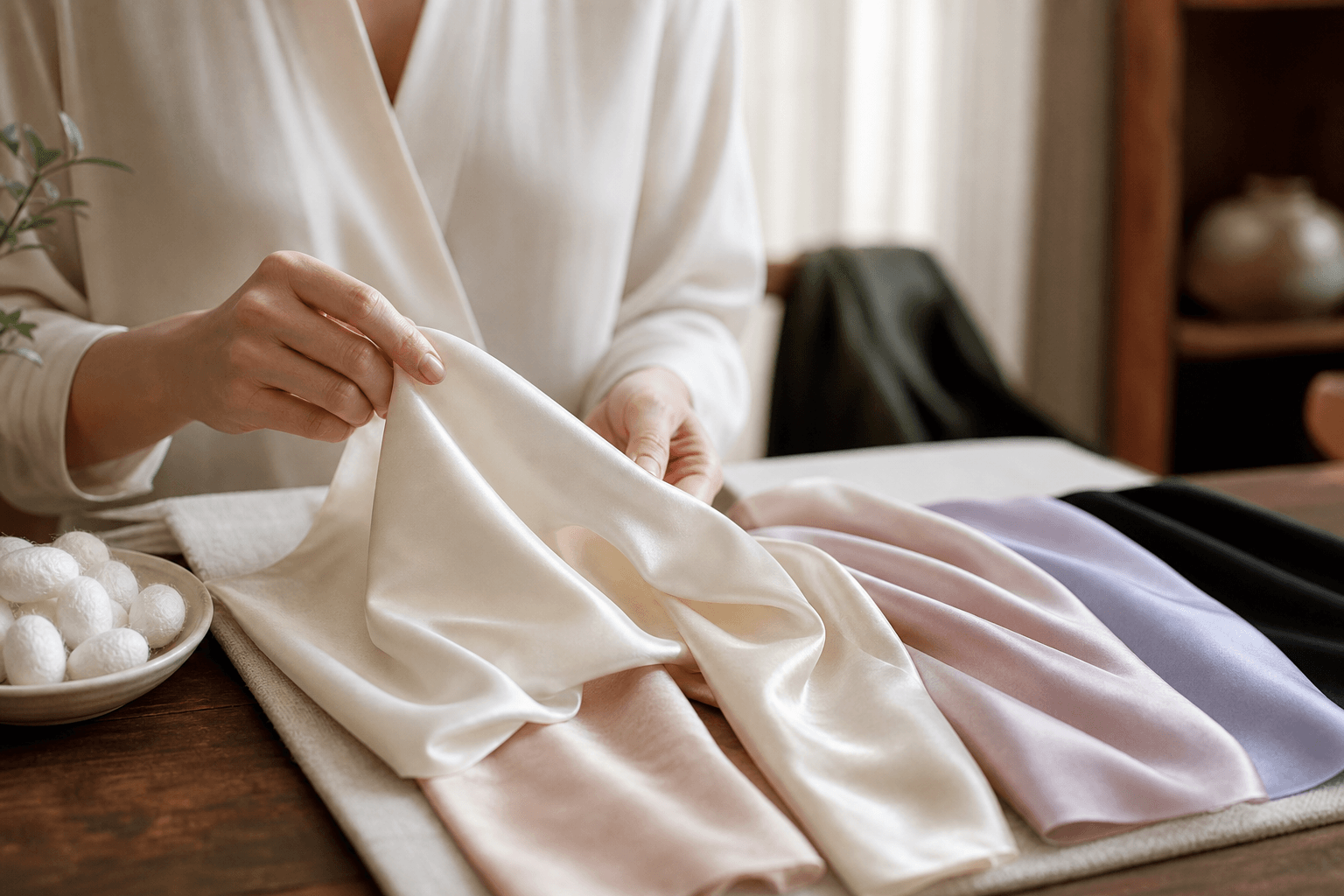
You do not need to memorize specs. Just ask yourself a few questions:
- Want something for skin contact, skincare, or gifting? → Choose Mulberry Silk. Smoothest, most stable, sensitive-skin friendly.
- Want a rustic look on a budget? → Tussah works, but expect a coarser feel and some color variation.
- Is sustainability your core message? → Eri has a strong story, but fewer options and less stable lead times.
- Want something rare and collectible? → Muga is exclusive, but not practical as an everyday staple.
If what you want is quality, consistency, and daily comfort, Mulberry Silk remains the most practical choice.
Choosing Silk Bedding: What Matters
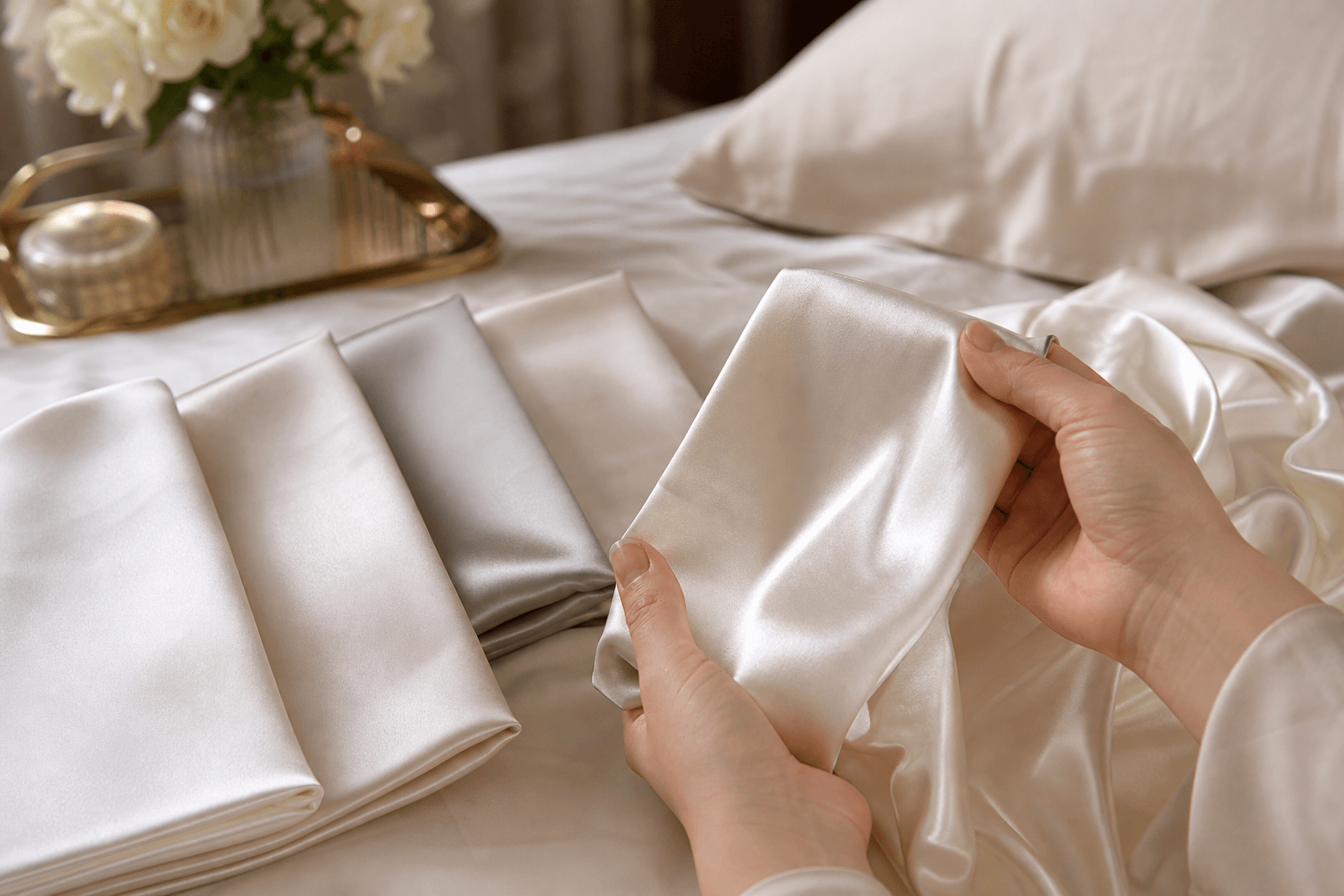
If you are buying silk for bedding, three specs matter most:
- Thread count — Higher generally means finer quality. Look for 400–600 for optimal softness and durability.
- Momme — Quality bedding usually falls between 19 and 25 momme. Heavier silk feels more durable and luxurious; lighter momme feels softer. For everyday bedding, 19–22 momme is a good starting point.
- Certification — Look for OEKO-TEX certification, which confirms the silk has been tested for harmful substances.
How to Wash and Care for Silk
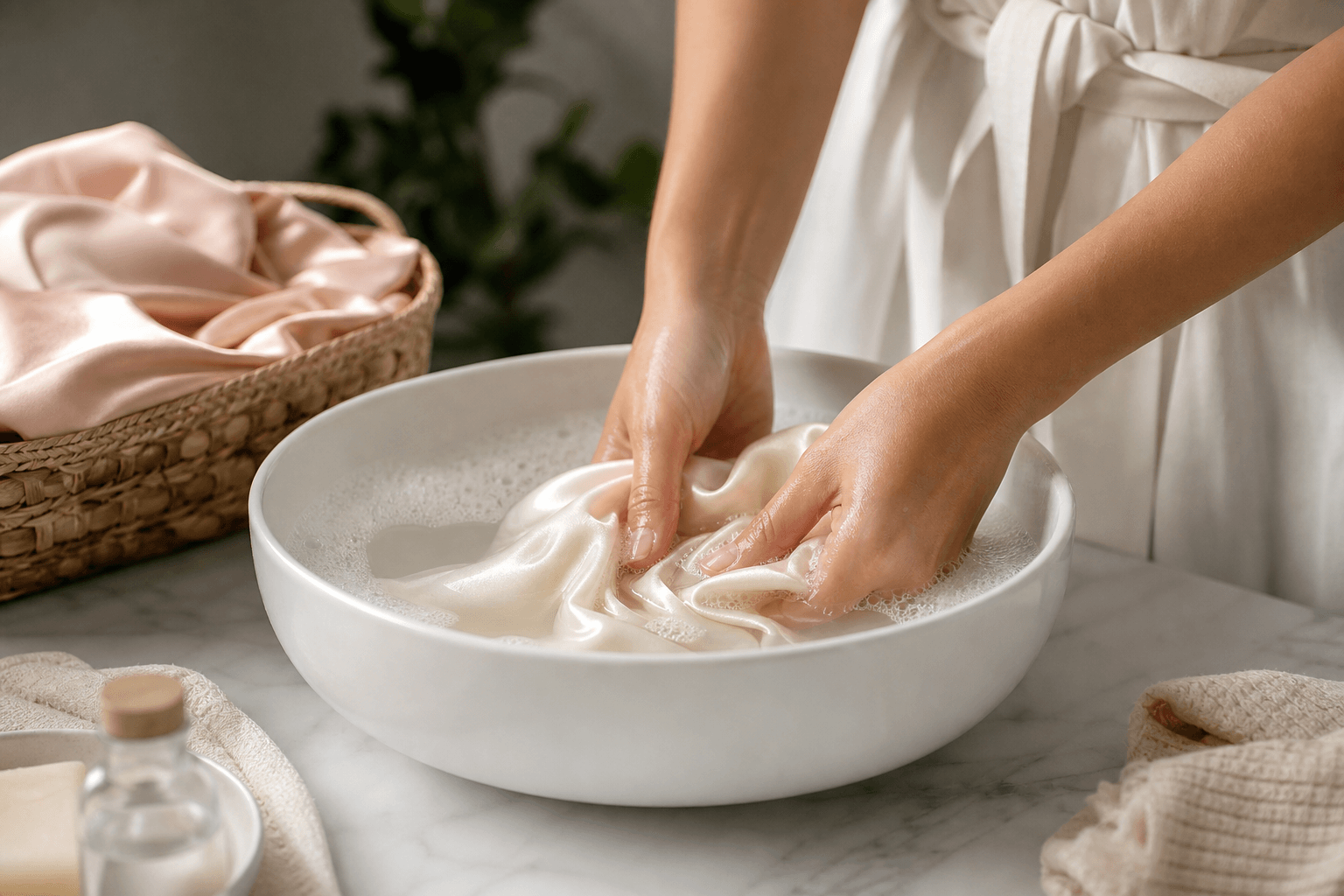
Good silk is maintained, not just bought. Keep these in mind:
- Hand wash in cold water with a mild, neutral detergent. Hot water and alkaline powders can weaken the fibers.
- Do not wring. Gently press out water, or roll in a towel to absorb moisture. Wringing can distort the fabric.
- Dry in the shade. Direct sunlight can yellow and weaken the fiber.
- Iron on low heat, with a cloth between the iron and the silk.
- Store separately to avoid friction and pilling from rough fabrics.
Follow these, and your Mulberry Silk will keep its smoothness and luster for a long time.
Why TOWNSSILK Is a Mulberry Silk Brand

TOWNSSILK is not a brand that sells every kind of silk. We are a Mulberry Silk brand — and we only make Mulberry Silk.
That is a deliberate choice, not a limitation. Here is why:
- It is the most skin-friendly. Mulberry silk has long, smooth fibers and is naturally hypoallergenic — gentle enough for sensitive skin, and comfortable enough for daily use.
- It is consistent and durable. Color and feel vary little between batches, and with proper care, Mulberry silk lasts for years. It is an investment, not a fast-fashion purchase.
- It is versatile. Bedding, sleep caps, eye masks, scrunchies, scarves, shirts, dresses, gifts — Mulberry holds up beautifully across all of them.
We are not saying Tussah, Eri, or Muga are bad. They are simply different: Tussah is coarser, Eri is limited, Muga is rare and expensive. None of them fit the everyday premium experience we want to deliver. So instead of doing a little of everything, TOWNSSILK does one thing — traceable, stable, skin-friendly Mulberry Silk — and turns it into products you can use every day.
What we make:
- Silk bedding — pillowcases, sheets, duvet covers
- Silk scarves — for daily wear and gifting
- Silk sleep caps — protect hair while you sleep
- Silk eye masks — soft, breathable, gentle on skin
- Silk scrunchies — kind to hair, no creasing
- Silk apparel — shirts, dresses, and more
FAQ
Q: Is silk not all the same? Why do prices vary so much?
A: No, it is not. The silkworm species, diet, fiber length, weave, fabric weight, origin, and grade all affect price. Two fabrics both called "silk" — Mulberry and Tussah — can differ several times over in both feel and cost.
Q: Which silk is best for sensitive skin?
A: Mulberry Silk is usually the top choice. Its fibers are fine, the surface is smooth, and it is hypoallergenic — making it friendlier for sensitive or allergy-prone skin.
Q: How can I tell if something is real Mulberry Silk?
A: Check the label for "100% Mulberry Silk," not just "100% Silk." Also look at fabric weight, origin, and grade. Choosing a traceable brand is the safest route.
Q: Is Eri Silk more sustainable than Mulberry Silk?
A: Eri's harvesting does not harm the silkworm, so its eco story is stronger. But its feel, color, and supply stability differ from Mulberry. They suit different needs — it is not simply a matter of one being better.
Q: Why is Muga Silk so expensive?
A: Because it is rare. It is produced only in Assam, India, has a natural golden color, and very limited output — which makes it expensive and best suited for collector-level pieces.
Q: Why does TOWNSSILK only make Mulberry Silk?
A: Because Mulberry is the most skin-friendly, consistent, durable, and versatile silk for everyday premium use. Instead of offering a little of everything, we focus on doing one thing well — traceable, stable, skin-friendly Mulberry Silk.
Q: What does TOWNSSILK actually sell?
A: Mulberry Silk is at the center of everything we make — bedding, scarves, sleep caps, eye masks, scrunchies, apparel, and more.
Conclusion
Mulberry Silk's smoothness, skin-friendliness, consistency, and durability make it the safest choice for most people. Understanding Tussah, Eri, and Muga is not about ranking them — it is about choosing the one that fits your needs.
The short version: if you want silk you can wear, sleep in, and gift without second-guessing — choose Mulberry Silk.
TOWNSSILK: A Mulberry Silk Brand
At TOWNSSILK, Mulberry Silk is the fiber we build around — skin-friendly, consistent, durable, and versatile. And we turn it into products you can use every day.
Whether you are looking for bedding, a scarf, a sleep cap, an eye mask, a scrunchie, or apparel — start with TOWNSSILK.