.svg?w=300&h=85)
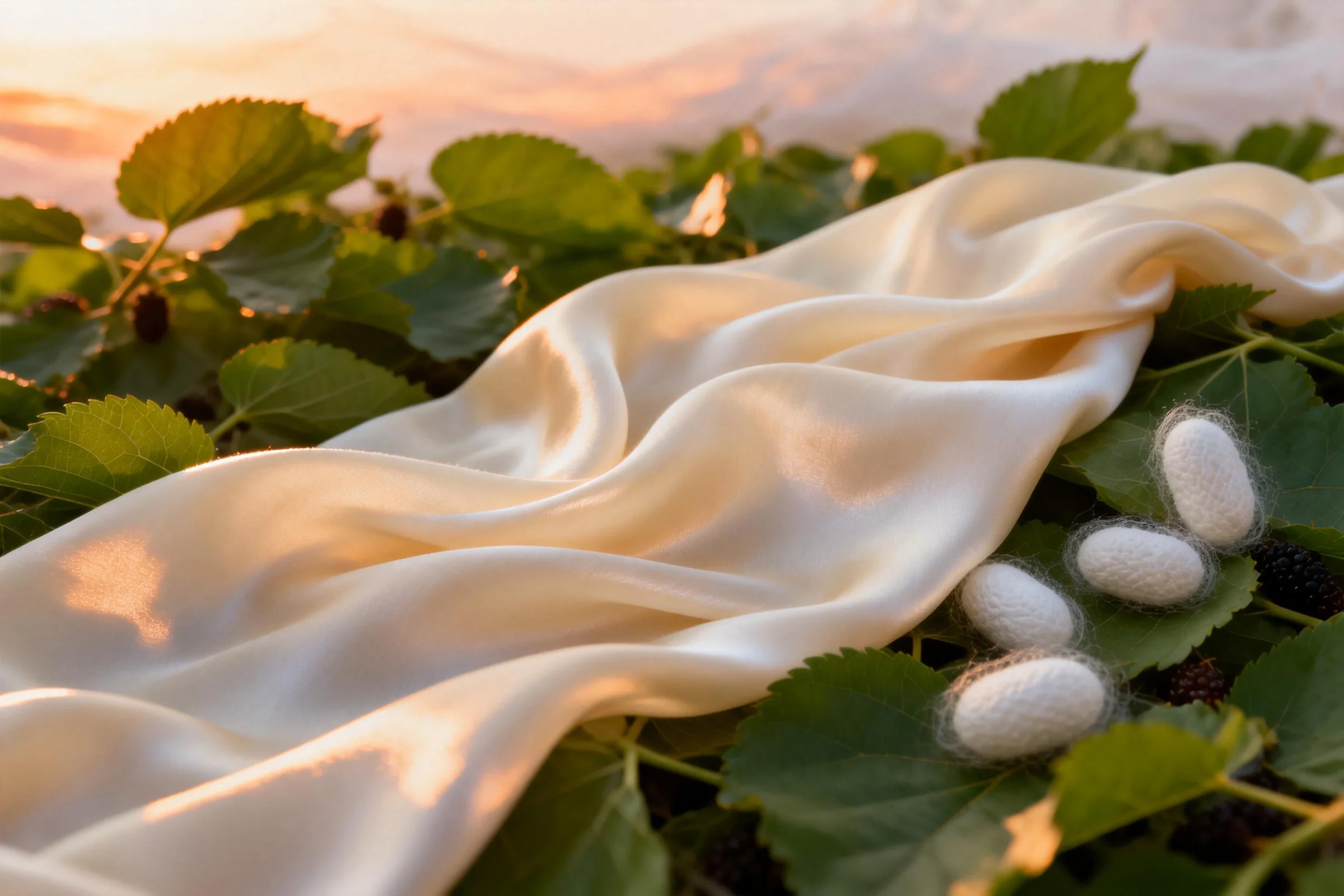
If you’re looking for a fabric that is simultaneously lightweight, skin-friendly, and eco-conscious, Mulberry silk deserves a spot in your cart. Backed by concise data and real-world cases, this article reveals why more sustainable fashion labels are betting on silk.
Natural Fiber, Naturally Superior
- Breathable fiber: Silk absorbs up to 30% of its own weight in moisture, wicks sweat quickly, and never feels clammy.
- All-season thermostat: Microscopic air pockets carry heat away in summer and trap warmth in winter, keeping you about 15% warmer than cotton of the same weight.
- Hypoallergenic by nature: 18 skin-loving amino acids keep silk’s pH close to that of human skin, so even sensitive types can wear it with confidence.
Sustainability, from Mulberry Leaf to Garment
- Low water use: Mulberry cultivation needs only one-third of the irrigation water required for cotton.
- On-site solar: A rooftop array of 540 kW panels supplies about 60% of yearly production power, cutting CO₂ by 600 tons annually.
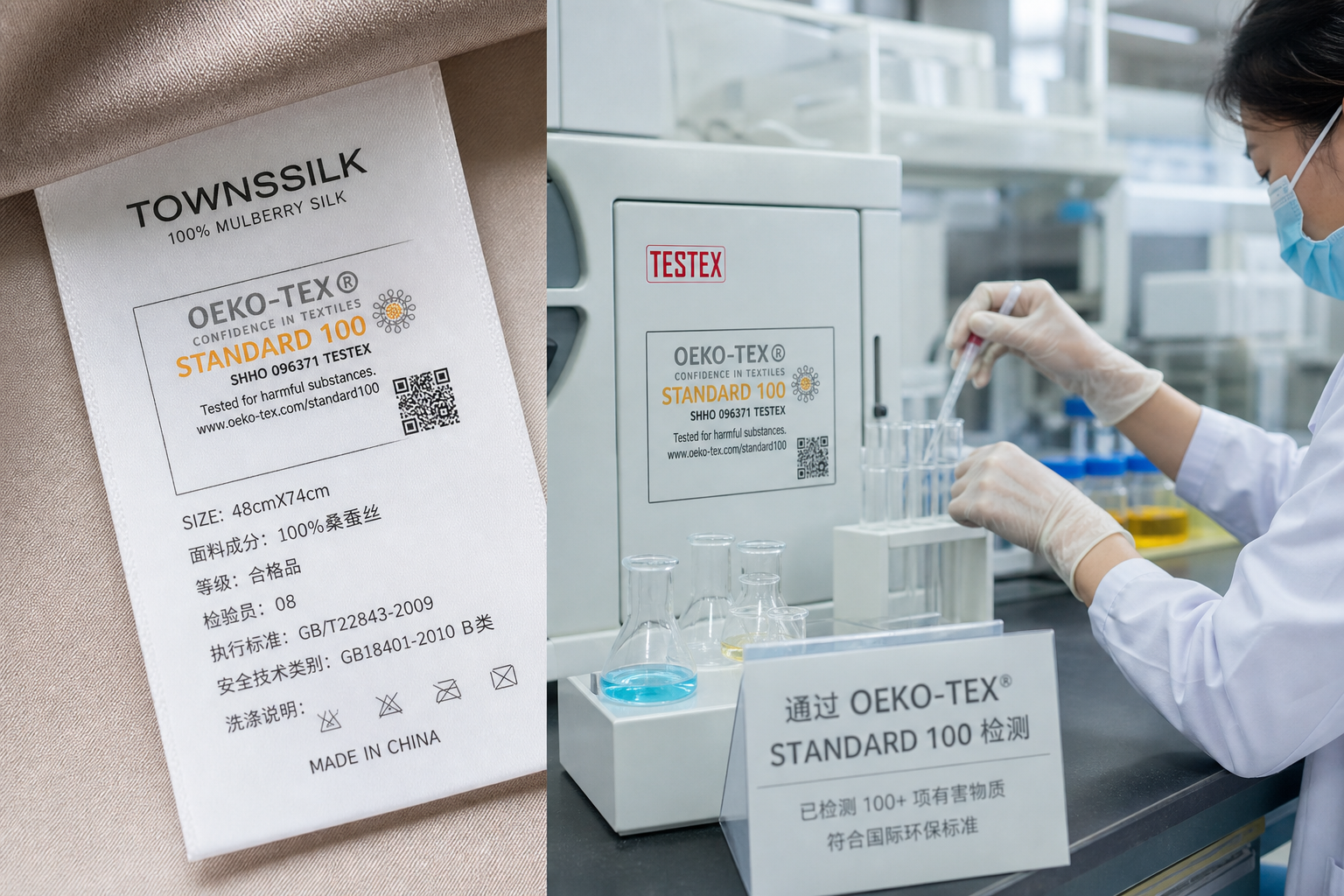
- Closed-loop dyeing: 95% of wastewater is recycled, and dyes hold dual OEKO-TEX® & ZDHC certifications.
Silk Care in 3 Easy Steps
- Use cold water with a neutral silk detergent; hand-wash gently or select the “Delicate” machine cycle.
- Press out moisture with a towel and lay flat to dry in the shade; avoid direct sun and tumble dryers.
- When slightly damp, steam-iron at 110 °C through a cloth to restore smooth drape.
Smart Silk Shopping Tips
- Check momme: 19 mm and up wears longer; choose 22–25 mm for bedding.
- Feel the hand: A smooth surface with no snagging and a natural drape when gently shaken.
- Look for labels: OEKO-TEX® or Bluesign® certifications mean fewer harsh chemicals and greater peace of mind.
FAQ
Will silk feel stuffy in summer?
No. Silk’s superior moisture-wicking beats cotton, keeping you noticeably fresher.
Is silk prone to snagging?
Choosing fabric of ≥22 mm in twill or satin weaves greatly reduces snag risks.
What makes silk eco-friendly?
Low-water mulberry farming, solar-powered production, closed-loop dyeing, and a fiber that biodegrades naturally within 6–9 months.
Conclusion
Breathability, softness, sustainability—silk bundles them all. If you want both your wardrobe and the planet to breathe easy, start with one high-quality silk piece.
.png?w=1536&h=1024)